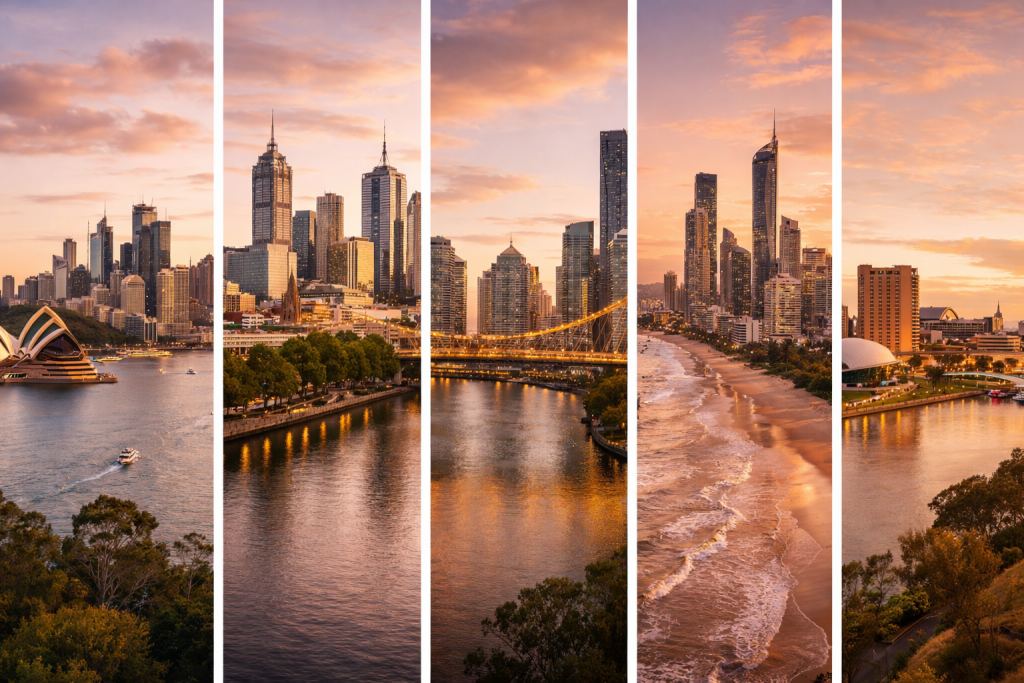
Chinese buyer demand is not evenly spread across Australia’s cities. Here is a clear-eyed look at where the action is — and why one city in particular deserves more of your attention right now.
Sydney: The Anchor Market
Sydney has long been the centre of gravity for Chinese property investment in Australia. The ATO’s foreign ownership register shows New South Wales has 8,862 foreign-owned properties, and the Chinese community in suburbs like Chatswood, Hurstville, Burwood, and Rhodes has created a self-reinforcing ecosystem — buyers move to where family, community, and familiar amenities already exist.
Sydney also hosts three of Australia’s top universities within easy reach of the CBD: the University of Sydney (ranked 18th globally by QS in 2025), UNSW (19th), and UTS — generating consistent student-family buyer demand. The challenge is that Sydney’s property prices are high and the competition among agents for Chinese buyers is strong.
Melbourne: The Cultural Capital
Melbourne runs a close second to Sydney in Chinese buyer demand. Victoria holds the largest concentration of foreign-owned homes in Australia — over 16,900 properties representing about 40% of the national total (ATO register data). Demand is strong across a wide geographic area, with the Box Hill and Glen Waverley corridors in the east particularly active.
Melbourne’s universities — the University of Melbourne (ranked 13th globally by QS), Monash (37th), and RMIT — generate consistent student-family buyer demand. The city’s reputation for food, culture, and lifestyle also resonates with the growing cohort of Chinese buyers relocating permanently.
Brisbane: The Market Agents Should Be Watching
Here is the trend worth paying attention to: Brisbane has been climbing the rankings for Chinese buyer interest steadily, and there are strong structural reasons why this will continue.
First, affordability. A buyer who cannot enter the Sydney or Melbourne market at their budget finds Brisbane genuinely compelling. Queensland’s population grew by 2.3% in the year to June 2024 — well above the national average — and the ATO register shows Queensland has 8,129 foreign-owned homes, with strong growth in recent years.
| ? Brisbane Olympics infrastructure commitment: The Queensland Government has committed over $7 billion to city upgrades including Cross River Rail, Brisbane Metro, and the $3.6 billion Queen’s Wharf precinct (opened August 2024). Suburbs near core Olympic facilities have seen house prices increase by more than 116% since 2020. (Source: Quantum Buyers Agents / Business View Oceania) |
Second, the 2032 Olympic Games effect. Brisbane is in the middle of one of the largest infrastructure investment cycles in any Australian city in recent memory. Suburbs near core Olympic facilities — Herston, Kelvin Grove, Spring Hill — have seen median house price growth of more than 116% since 2020, compared with the overall Brisbane market at 40-50%.
Third, community. Brisbane’s Chinese community is growing rapidly, particularly in suburbs like Sunnybank, Robertson, and Eight Mile Plains. For family buyers, the presence of Chinese grocery stores, restaurants, and community organisations is a genuine factor — and Brisbane’s Chinese community infrastructure has grown significantly in the past five years.
Beyond the Big Three
Perth, Adelaide, and the Gold Coast are all seeing increased Chinese buyer activity. The Gold Coast deserves a specific mention for its growing appeal to Chinese buyers interested in tourism and lifestyle property. Resort-style apartments near theme parks and beaches attract a buyer profile that is partly investor and partly lifestyle-motivated.
Practical Implications for Agents
Understanding the geographic distribution of Chinese buyer demand helps you identify whether your existing portfolio is well-positioned and which markets to watch. Regardless of city, the fundamental strategy is the same: identify the properties most likely to appeal to Chinese buyers, ensure they are visible on dedicated Chinese buyer platforms, and present them in a way that speaks to Chinese buyer priorities.
Our own enquiry data backs this up. Demand is no longer just Sydney and Melbourne — Perth, Adelaide and even Canberra are increasingly picked up. And buyers are moving out of the established Chinese areas into traditionally Anglo suburbs, chasing lifestyle rather than proximity to Asian groceries.
Common questions
Where is Chinese buyer demand strongest across Australia?
Sydney remains the anchor market, with established Chinese communities in Chatswood, Hurstville, Burwood, and Rhodes, plus three top universities nearby. Melbourne runs a close second and holds the largest concentration of foreign-owned homes, over 16,900 properties or about 40 percent of the national total. Brisbane is the rising market. Beyond the big three, Perth, Adelaide, and the Gold Coast are all seeing increased activity.
Why is Brisbane rising fast for Chinese buyers?
Three reasons. First, affordability, since buyers priced out of Sydney or Melbourne find Brisbane compelling, and Queensland’s population grew 2.3 percent in the year to June 2024. Second, the 2032 Olympics, with suburbs near core facilities such as Herston and Kelvin Grove seeing median house price growth of more than 116 percent since 2020. Third, a fast-growing Chinese community in Sunnybank, Robertson, and Eight Mile Plains.
How should this geographic picture shape my approach?
Use it to check whether your current portfolio is well-positioned and which markets to watch. The fundamental strategy stays the same across every city. Identify the properties most likely to appeal to Chinese buyers, make sure they are visible on platforms where these buyers search, and present them in a way that speaks to Chinese buyer priorities. The city changes; the method does not.
Win the listing with global reach.
Show vendors their home in front of Chinese and international buyers across 50+ portals in 40+ countries, with a live dashboard you can share in the listing presentation.
See how it works →