
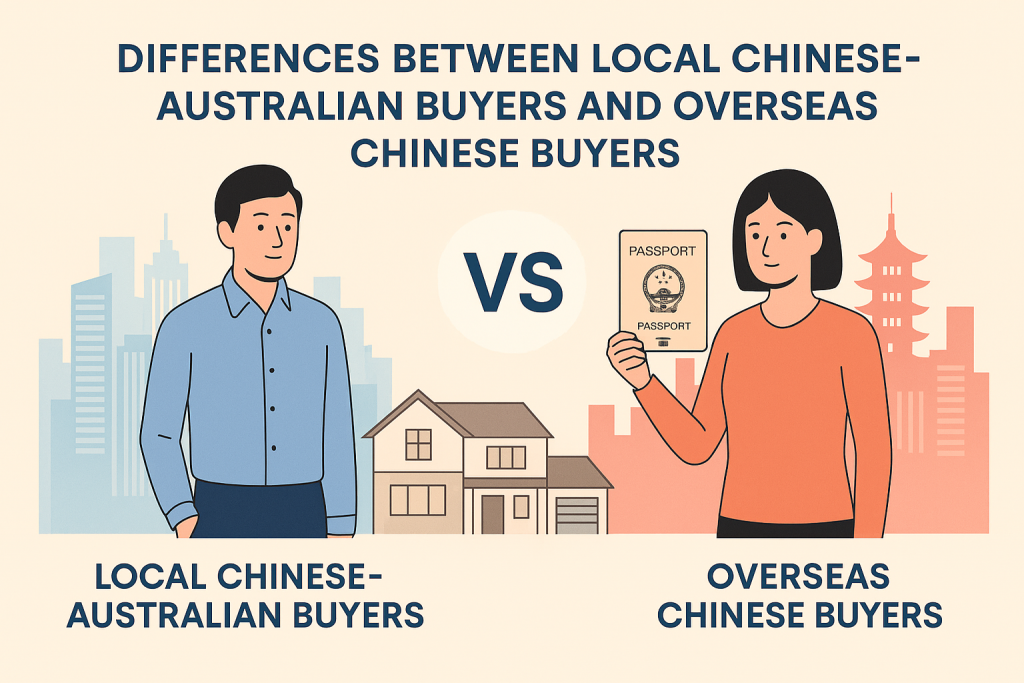
Local Chinese-Australian buyers and overseas Chinese buyers share a culture, but they buy differently. Locals are citizens or residents who finance here and can buy any home. Overseas buyers face foreign-buyer rules and mostly buy new. Knowing which one you’re dealing with changes how you market the property.
Same heritage, two very different buyers at your open home.
How does residency change what each buyer can do?
Local Chinese-Australian buyers are citizens or permanent residents. They usually get local bank finance at standard rates and sit outside the foreign-buyer rules. Some still draw on family money from overseas, but the purchase itself is a local one.
Overseas buyers, often in China, Hong Kong, Singapore, or Malaysia, face stricter conditions. The ban on established homes runs 1 April 2025 to 30 June 2029, so they buy new builds or off-the-plan. They may pay higher duties and often rely on overseas loans or cash. Spouses and New Zealand citizens are not caught by this.
What is each group actually buying for?
Local buyers tend to buy for their own use or a long-term hold. Schools, transport, distance to the CBD, and established Chinese areas like Box Hill, Chatswood, or Sunnybank weigh heavily.
Overseas buyers lean toward spreading their assets, planning for a child’s education, or a future move here. They may buy an apartment near a university before any visa comes through.
What kind of property does each one want?
Local buyers often want space, a house or townhouse in the suburbs, with land and growth in mind. They may happily consider an established home.
Overseas buyers usually look at new apartments or off-the-plan, partly because of the rules. For them, being near a university, the city, or a known landmark matters more than land size.
How fast does each group decide?
Local buyers move quicker. They attend inspections and auctions, deal with you face to face, and read local market data themselves.
Overseas buyers take longer. Family and trusted advisers shape the decision, and distance plus legal steps add time and a need for reassurance.
How should marketing differ for each?
For local Chinese buyers, advertise through local Chinese media, point to schools, lifestyle, and amenities, and run inspections and auctions with Mandarin support.
For overseas buyers, focus on the platforms they use, such as WeChat, Weibo, Baidu, and Little Red Book. ACproperty also publishes your listing on one of China’s largest property portals. Lead with investment potential, rental return, and any visa-related angle, and offer virtual tours and bilingual contracts.
So why does the distinction matter?
Treat the two groups the same and you misread half your buyers. The motivations, the finance, and the property type all pull in different directions.
Read which buyer is in front of you and the marketing follows naturally, for both local and overseas Chinese audiences.
In our experience the timelines differ sharply. Overseas buyers usually take three to six months, researching and narrowing down, often planning to arrive in around three months — which makes them a natural fit for off-the-plan and new developments. Local Chinese buyers, already here, move much faster, and often faster than local Anglo buyers once they have done their research.
Common questions
What is the key difference between local and overseas Chinese buyers?
Local Chinese-Australian buyers are citizens or permanent residents. They get easier local financing, are not subject to FIRB restrictions, and may consider established homes. Overseas buyers usually face FIRB rules and tend to buy new property. Their motivations differ too, with locals focused on family and lifestyle, and overseas buyers on education, migration, and long-term value.
What kind of property does each group prefer?
Local buyers often want larger houses or townhouses in the suburbs, valuing land size, growth, and lifestyle. They may be open to established homes. Overseas buyers more often look for brand-new apartments or off-the-plan, partly due to the rules. For them, location near universities, city centres, and landmarks matters more than land size.
How should I market differently to each group?
For local buyers, use local Chinese media, run inspections with Mandarin support, and highlight schools, lifestyle, and community. For overseas buyers, focus on platforms popular in China such as WeChat and Chinese property portals. Emphasise investment potential, rental returns, and education access, with virtual tours and bilingual materials.
Win the listing with global reach.
Show vendors their home in front of Chinese and international buyers across 50+ portals in 40+ countries, with a live dashboard you can share in the listing presentation.
See how it works →